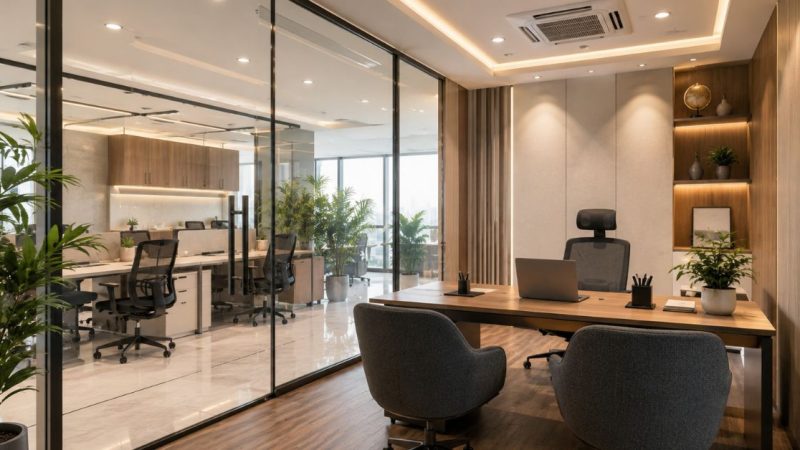
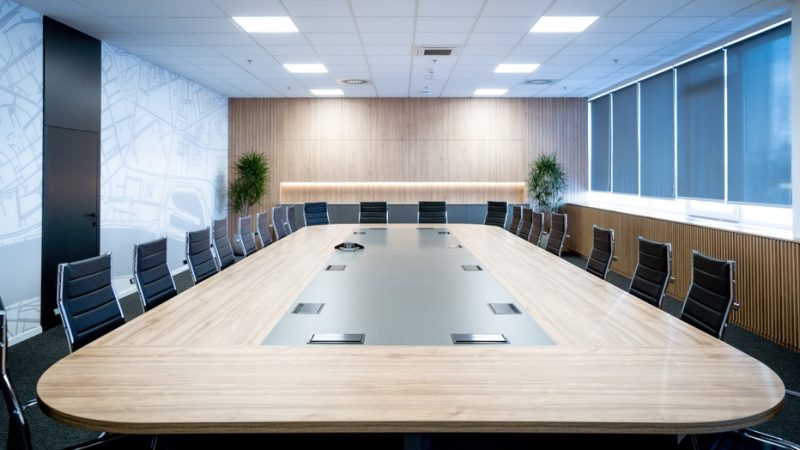
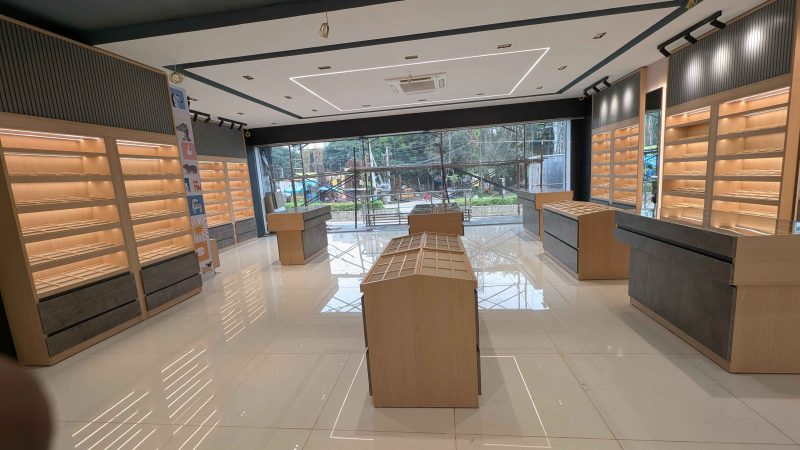
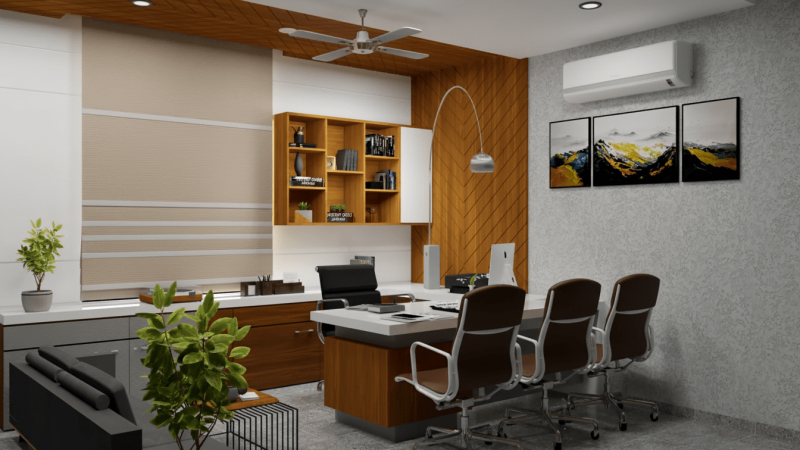
Office Interior Design Tips for Small Businesses and Compact Workspaces
Small workspaces can turn into a kind of tangle pretty fast and start to feel awkward; then they can get rather unproductive if they aren’t planned. Whether you are turning a spare room into a home office, building a working station within a studio apartment, or shaping a compact office zone for your business, every square foot counts, period. The best office interior design technique can help you wring more from the limited area while also crafting a place that feels deliberate, quietly uplifting, a nd genuinely comfortable enough to stay in for long hours.
A properly done compact workspace isn’t just about stuffing a desk and chair in there, you know. It feels more like tuning your focus, nudging efficiency up, and making a small little context where you can actually enjoy doing the work. In this guide, you’ll pick up real office design ideas, practical storage solutions, some layout guidance too, and tried-and-tested suggestions that together help remake even the tiniest workspace into a genuinely workable zone.
Why Good Office Interior Design Matters in Small Spaces
Limited space doesn’t mean limited possibilities. Thoughtful office design creates an environment where everything has a purpose.
Benefits include:
- Better organization
- Improved productivity
- Reduced visual clutter
- Comfortable working posture
- Better lighting and airflow
- Enhanced creativity
A compact workspace designed intelligently can often feel more efficient than a large office with poor planning.
Office Interior Design for Compact Workspaces
Designing a small office requires balancing functionality, comfort, and aesthetics. Instead of trying to fit everything into one room, focus on making every element work harder.
Consider these essential principles:
Prioritize Function First
Before choosing furniture or décor, think about how you actually work.
Ask yourself:
- Do you mainly use a laptop or multiple monitors?
- Do you need storage for files?
- Will clients visit?
- Do you take frequent video calls?
- Do you need writing space?
Your answers determine the ideal layout.
Choose Space-Saving Furniture
Compact furniture makes a huge difference.
Some smart choices include:
- Floating desks
- Foldable workstations
- Corner desks
- Wall-mounted shelves
- Slim drawer units
- Storage benches
Multi-functional furniture helps maximize usable floor area.
Use Vertical Space
When floor space is limited, think upward.
Install:
- Floating shelves
- Pegboards
- Wall organizers
- Cabinets above the desk
- Magnetic boards
- Hanging organizers
Vertical storage keeps essentials within reach without crowding your workspace.
Select the Right Office Layout
Every compact workspace is different.
Popular layouts include:
Corner Office Setup
Perfect for unused room corners.
Advantages:
- Uses dead space efficiently
- Leaves room for movement
- Ideal for apartments
Wall-Mounted Workspace
A floating desk creates an open appearance.
Ideal for:
- Studio apartments
- Bedrooms
- Shared living spaces
It provides functionality while maintaining visual openness.
Niche Office Design
Unused alcoves can become excellent workstations with custom cabinetry and shelves.
This approach works particularly well in modern homes where every inch matters.
Make Lighting a Priority
Poor lighting affects productivity and eye comfort.
For compact offices:
- Position the desk near a window whenever possible.
- Use layered lighting.
- Add an adjustable task lamp.
- Choose warm-white LED lighting.
- Reduce screen glare.
Natural light also makes small rooms feel larger and more inviting.
For ergonomic lighting recommendations, refer to the OSHA Computer Workstation Guide.
Pick Colors That Make Small Offices Feel Bigger
Color significantly influences how spacious a room appears.
Good choices include:
- White
- Light grey
- Beige
- Soft sage
- Pale blue
- Warm neutrals
Accent colors can be introduced through:
- Artwork
- Office accessories
- Cushions
- Rugs
- Plants
Avoid using too many dark colors in compact rooms.
Smart Storage Solutions
Storage is often the biggest challenge in compact offices.
Here are practical ideas:
Hidden Storage
Choose furniture with built-in storage, such as:
- Storage ottomans
- Desk drawers
- Cabinets
- Mobile pedestals
Floating Shelves
They provide storage without taking up floor space.
Perfect for:
- Books
- Awards
- Decorative pieces
- Office supplies
Cable Management
Visible cables make even organized offices appear messy.
Use:
- Cable trays
- Cable sleeves
- Desk grommets
- Under-desk organizers
Small improvements create a cleaner workspace instantly.
Choose Comfortable Ergonomic Furniture
Comfort directly affects productivity.
Invest in:
- Adjustable office chair
- Desk at proper height
- Laptop stand
- External keyboard
- Footrest if needed
Even compact workspaces should prioritize healthy posture.
For workstation setup recommendations, visit the Mayo Clinic Office Ergonomics Guide.
Decorate Without Creating Clutter
Minimal decoration often works best.
Ideas include:
- One statement artwork
- Indoor plants
- Small bookshelf
- Neutral rug
- Decorative desk lamp
- Simple wall clock
Avoid overcrowding shelves with decorative items.
Less visual clutter helps improve concentration.
Technology Tips for Small Workspaces
Modern technology helps reduce clutter.
Useful additions include:
- Wireless keyboard and mouse
- Docking station
- Wireless charger
- Compact printer
- Monitor arm
- Noise-cancelling headphones
These upgrades create a cleaner, more efficient workspace.
Design Ideas for Different Compact Workspaces
Small Apartment Office
- Foldable desk
- Floating shelves
- Light-colored furniture
- Compact storage
Bedroom Office
- Use one wall only
- Keep décor minimal
- Separate work and sleeping zones
Under-Stair Office
A surprisingly effective solution.
Include:
- Built-in shelves
- Custom desk
- LED lighting
- Closed storage
Shared Family Workspace
Choose:
- Double workstation
- Individual storage
- Shared shelving
- Comfortable chairs
This layout works well for couples and children studying together.
Common Mistakes to Avoid
Many people unknowingly reduce the functionality of small offices.
Avoid these mistakes:
- Buying oversized furniture
- Ignoring storage needs
- Poor lighting placement
- Too many decorative items
- Choosing style over comfort
- Blocking natural light
- Poor cable management
- Skipping ergonomic furniture
- Using dark colors everywhere
Correcting these issues can dramatically improve your workspace.
Pro / Expert Tips
Professional interior designers often recommend these strategies:
- Measure your room before purchasing furniture.
- Leave enough walking space around the desk.
- Keep frequently used items within arm’s reach.
- Add greenery to improve the atmosphere.
- Choose furniture with multiple functions.
- Use mirrors to create a sense of depth.
- Stick to a consistent color palette.
- Review your workspace every few months and remove unnecessary items.
Small changes often produce the biggest improvements.
Frequently Asked Questions
1. What is the best desk for a compact office?
Floating desks, corner desks, and foldable desks are excellent choices because they save valuable floor space while providing enough room for daily work.
- Which colors make a small office look bigger?
Light shades such as white, beige, light grey, soft blue, and warm neutrals reflect more light and make compact spaces feel open and airy.
- How can I organize a small office efficiently?
Use vertical storage, floating shelves, drawer organizers, cable management accessories, and multi-purpose furniture to keep your workspace tidy.
- Is ergonomic furniture worth buying for a small workspace?
Yes. A quality ergonomic chair and properly sized desk improve posture, reduce fatigue, and support long-term comfort, regardless of room size.
- How do I make my compact office feel less cramped?
Maximize natural light, keep décor minimal, choose space-saving furniture, maintain clear walkways, and use a cohesive color scheme to create an open and inviting feel.
Conclusion
Creating a productive workspace doesn’t require a large room. With thoughtful planning, smart furniture choices, efficient storage, and a clean design approach, even the smallest office can become comfortable, functional, and visually appealing.
The best office interior design focuses on how you work, not just how the space looks. By optimizing every corner, embracing multifunctional furniture, and keeping clutter under control, you can transform a compact workspace into an environment that supports productivity, creativity, and everyday comfort. Whether you’re designing a home office or upgrading a small business workspace, these practical ideas will help you make the most of every square foot.